


The fiddle leaf fig asks for different things in different seasons. Get the summer-and-winter rhythm right and the fussy reputation mostly disappears.
Here is the thing almost nobody tells you about the fiddle leaf fig: in the wild it doesn't start in the ground. Ficus lyrata often begins life as an epiphyte, a seed lodged high in the canopy of another West African tree, sending roots down toward the forest floor until it can stand on its own. It is a strangler fig by nature. That single fact explains almost everything your plant wants at home: bright but filtered light, warmth, steady humidity, and to be left in one good spot rather than shuffled around.
It also explains the seasons. A rainforest tree lives by warm growing spells and cooler resting ones, and your indoor one still keeps that clock. The calendar month matters less than the season you are actually in, so if you are reading this from the other hemisphere, simply flip the dates: what follows is organised by the plant's rhythm, not the wall calendar.

The warm months: its growing season
Spring into summer is when the plant does its living. Warmth and long light wake it up, new leaves push from the top, and everything you do should support that push.
Watering
Water when the top 3 to 5cm of soil has dried out, roughly weekly, but check with a finger rather than trusting the calendar. When you do water, soak it thoroughly until it runs from the drainage holes, then tip out the saucer. Never let the roots sit in water.
Consistency matters more than volume. Erratic watering, not underwatering, is the most common reason a fiddle leaf drops leaves.
Feeding
This is the season to feed. A balanced liquid fertiliser formulated for foliage plants every two to four weeks, or a slow-release pellet worked into the topsoil, is plenty. Go gently: over-feeding makes the plant grow leggy and weak, and more fig plants are harmed by too much fertiliser than too little.
Light
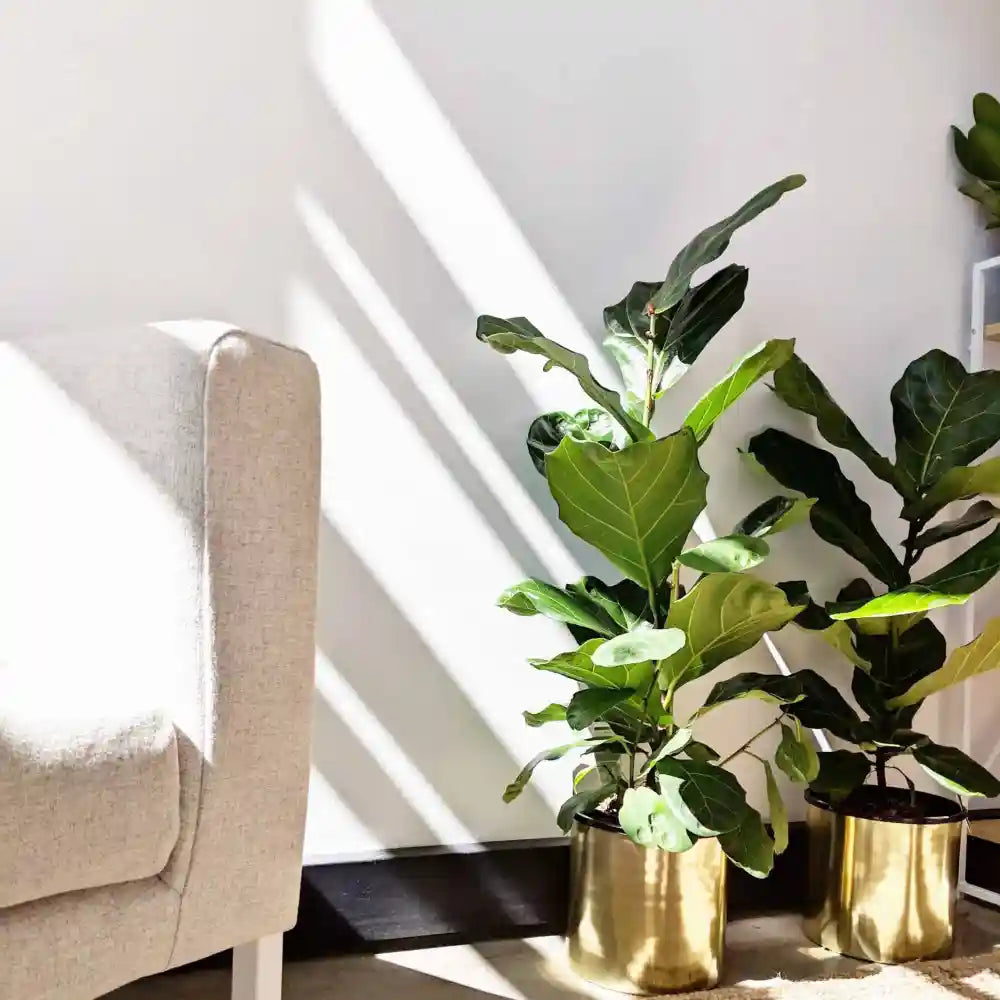
Bright, indirect light is the sweet spot: the brightest room you have, but just far enough from the glass that harsh midday sun doesn't scorch the leaves into bleached patches. Rotate the pot a quarter-turn each time you water. Fiddle leaf figs grow toward the light and will lean and grow lopsided if you never turn them.
Pruning and shaping
The growing season is the only sensible time to prune. Cut cleanly at an angle just above a node and, within a few weeks, one to three new branches usually appear below the cut. Want a tall bare stalk to branch without losing its height? Try notching: a shallow cut about a third of the way through the stem, just above a dormant bud. It succeeds roughly half to two-thirds of the time, and only in active growth.
One quiet caution: like all figs, a cut stem weeps a milky white sap that can irritate skin. Wear gloves, and keep it off furniture.
Leaf cleaning
Those big leaves are the whole engine, and dust genuinely dulls their ability to gather light. Wipe both sides with a soft, damp cloth every couple of weeks. Skip the silicone leaf-shine sprays sold for exactly this: they clog the tiny pores the leaf breathes through, and a clean cloth gives the same gloss without the harm.
The calendar month matters less than the season the plant is actually living in.
The cool months: its resting season
As light shortens and temperatures fall, growth slows to almost nothing. The plant isn't sick, it's resting, and the whole job now flips from feeding growth to simply not harming it. This is where most fiddle leaf figs are quietly killed with kindness.
Watering
Water far less often. Cool, dim conditions mean the soil stays wet much longer, so the same weekly pour that helped in summer will now drown the roots. Wait until the top of the soil is properly dry, then water fully and empty the saucer. When in doubt, wait: overwatering in the resting season is the classic fiddle leaf killer.
Feeding
Stop. A resting plant can't use the nutrients, so feeding now just leaves fertiliser salts building up in the soil, which can burn the roots. Resume only when you see fresh growth return.
Warmth and draughts
Keep it well above cold. Growth stalls below about 12 to 15°C, and a cold snap or an icy draught from a window or door triggers a sulk and a flurry of dropped leaves. Move it off cold glass, and equally away from heating vents: repeated blasts of hot, dry air scorch the leaves and dry the plant out fast.
Light and humidity
With weaker, shorter days, shift the plant closer to your brightest window to make up the shortfall (just not touching cold glass). Indoor heating strips moisture from the air, so a rainforest plant feels the dryness: group it with other plants, stand it on a tray of damp pebbles, or run a humidifier nearby. A fortnightly wipe of the leaves also lets you catch spider mites early, since they thrive in dry, heated rooms.


Three things people get wrong all year
Those white dots aren't a disease. Small raised white specks on the leaves that won't wipe off are not pests or mould. They are lithocysts: natural mineral cells (a little store of calcium) that many figs carry, and they may even help the leaf use light. Leave them be. Scrubbing only damages the leaf.
Brown patches tell you which mistake you made. Dark, soft brown spots, often from the centre or lower leaves, mean too much water. Dry, crispy brown edges mean too little, or scorching sun. Reading the difference saves the plant.
Moving it is a stressor, not a treat. Fiddle leaf figs hate change. A move to a new room, even a better one, often costs a few leaves while it acclimatises. Choose the spot thoughtfully, then leave it there.
Starting fresh, or gifting one?
Our fiddle leaf figs arrive styled and ready to anchor a room, alongside the rest of our indoor plants. Shop our indoor plants →
Fiddle leaf fig care, answered
How often should I water a fiddle leaf fig?
Roughly weekly in the warm growing months, and noticeably less in the cool resting months, but always by the soil, not the calendar. Water only when the top few centimetres are dry, soak it thoroughly, and never leave it sitting in a full saucer.
Should I fertilise in winter?
No. Feed only during active growth in spring and summer. A resting plant can't use fertiliser, and feeding it then builds up salts that can burn the roots.
When is the best time to prune?
During the warm growing season, when the plant can heal and branch quickly. Avoid pruning in the resting months: it can't replace those leaves, and every leaf is a food factory it needs to get through winter. Wear gloves, as the sap irritates skin.
Why is my fiddle leaf fig dropping leaves?
Usually a change it didn't like: inconsistent watering, a cold draught, or a recent move. Fix the cause, be patient, and new growth typically returns in the next warm spell.
Is the fiddle leaf fig safe around pets?
No. Ficus lyrata is toxic to cats and dogs (and irritating to people) if chewed, so keep it up and out of reach. See our guide to plants that are toxic to pets for the full list.
Looked after with the seasons in mind, a fiddle leaf fig is a decades-long companion, not a fussy houseguest: they can live 25 to 50 years indoors, and the species even holds the Royal Horticultural Society's Award of Garden Merit. If you like the look of Ficus lyrata but want something more forgiving, its cousin the rubber plant shares the same handsome family with an easier temperament. Or browse our full indoor plant range to find the one that suits your light, and your patience.
