


A trade-show stand is not a flower problem. It is a merchandising one, and that is the job I was trained to do.
Before flowers, my job was to make people stop walking. You learn quickly in fashion that a beautiful thing nobody notices may as well not exist. The materials change (silk, then stems) but the problem never does: in a crowded room, how do you make one eye land on one thing.
So when Louvelle asked us to dress their stand, it felt less like a new brief than an old one in a different medium. Louvelle is an Australian brand founded by Simone Taylor, built on a beautifully simple idea, a shower turban that actually protects a blow-dry, which ended up on Oprah's list and is now sold around the world. The task was a four-day trade show, Life InStyle, with more than four hundred other stands all shouting at once. Stand out, or be walked past.

Standing out is not luck, and it is not volume. It is merchandising. You decide the one gesture that does the work (here, a wall installation you could see three aisles away) and then you let everything else support it quietly. You think about sightline, about where a person's eye goes first and second. You match the flowers to the brand the way you would style a campaign, not the way you would fill a vase.
I sprayed palm fronds gold to meet the gold in their logo. In fashion you call that styling to the brand. In flowers, people sometimes call it a happy accident. It is neither. It is a decision, and it is the same decision I made for ten years in the Country Road Group world before I ever owned a pair of secateurs.
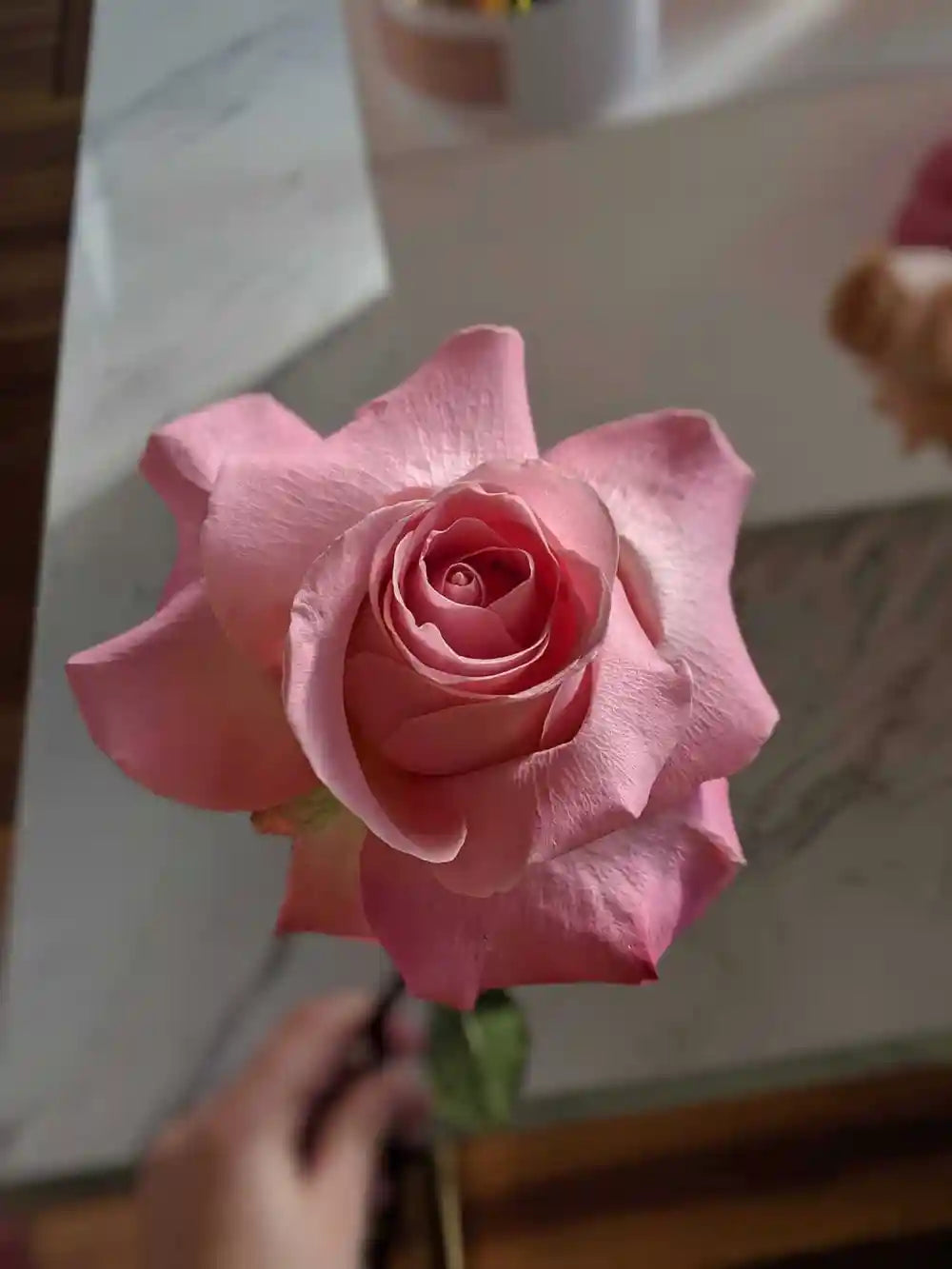
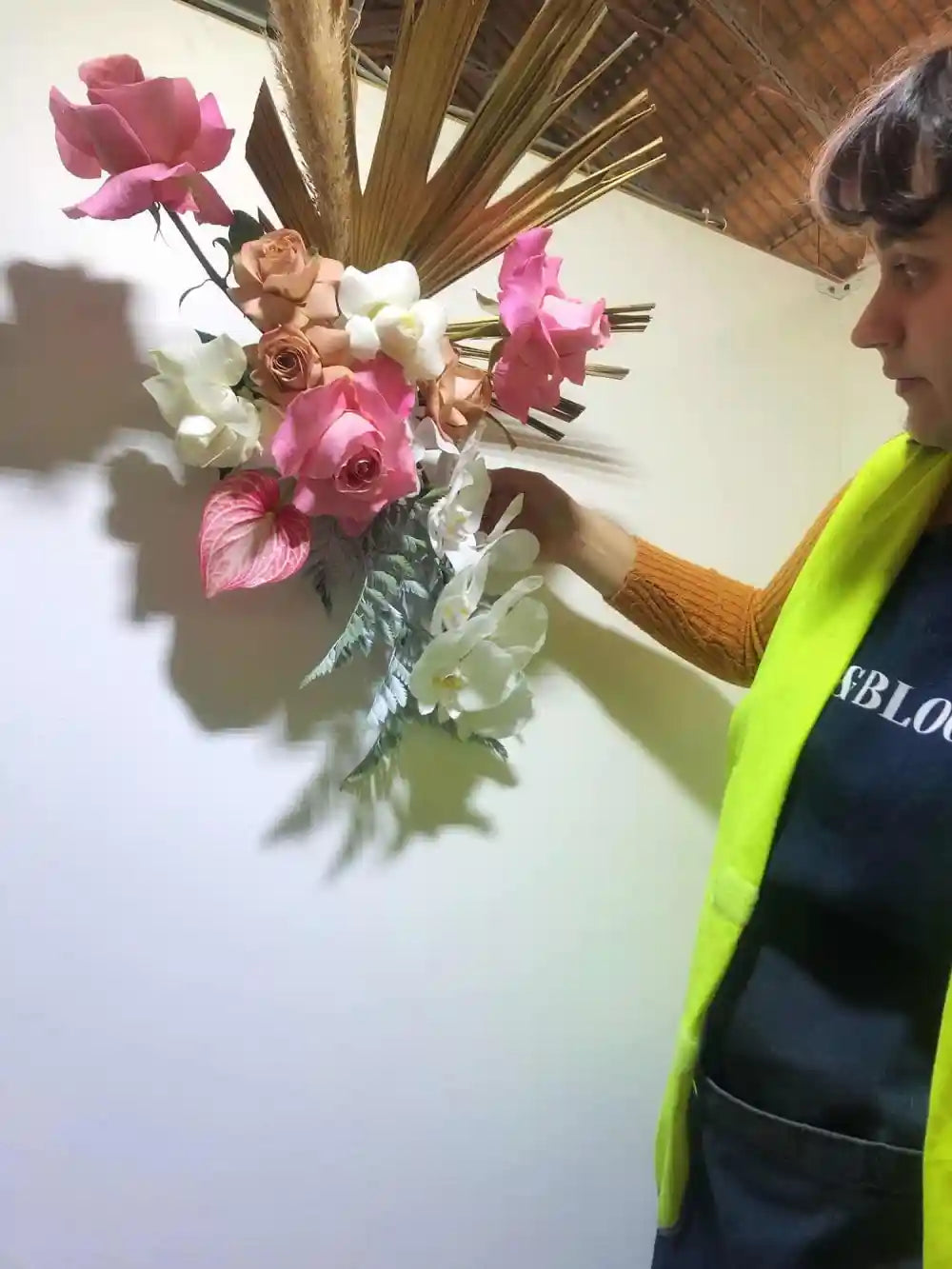
Every stem was picked for shape and sightline rather than for what happened to be in the bucket: pink roses for warmth, draping phalaenopsis orchids for the line they make as they fall, pampas and white cotton for texture you read from a distance. This is what I mean when I say a florist should be a designer, not a dispatcher. A dispatcher would have sent a nice arrangement. The brief asked for a first impression, and a first impression has to be designed.
A beautiful thing nobody notices may as well not exist.
Here is the part I found quietly satisfying. People remembered the flowers before they remembered the product. That is not a failure of the product. It is exactly what a first impression is for. The flowers were the reason a stranger crossed the aisle, and crossing the aisle is the whole game. The moment after is where the brand actually begins.
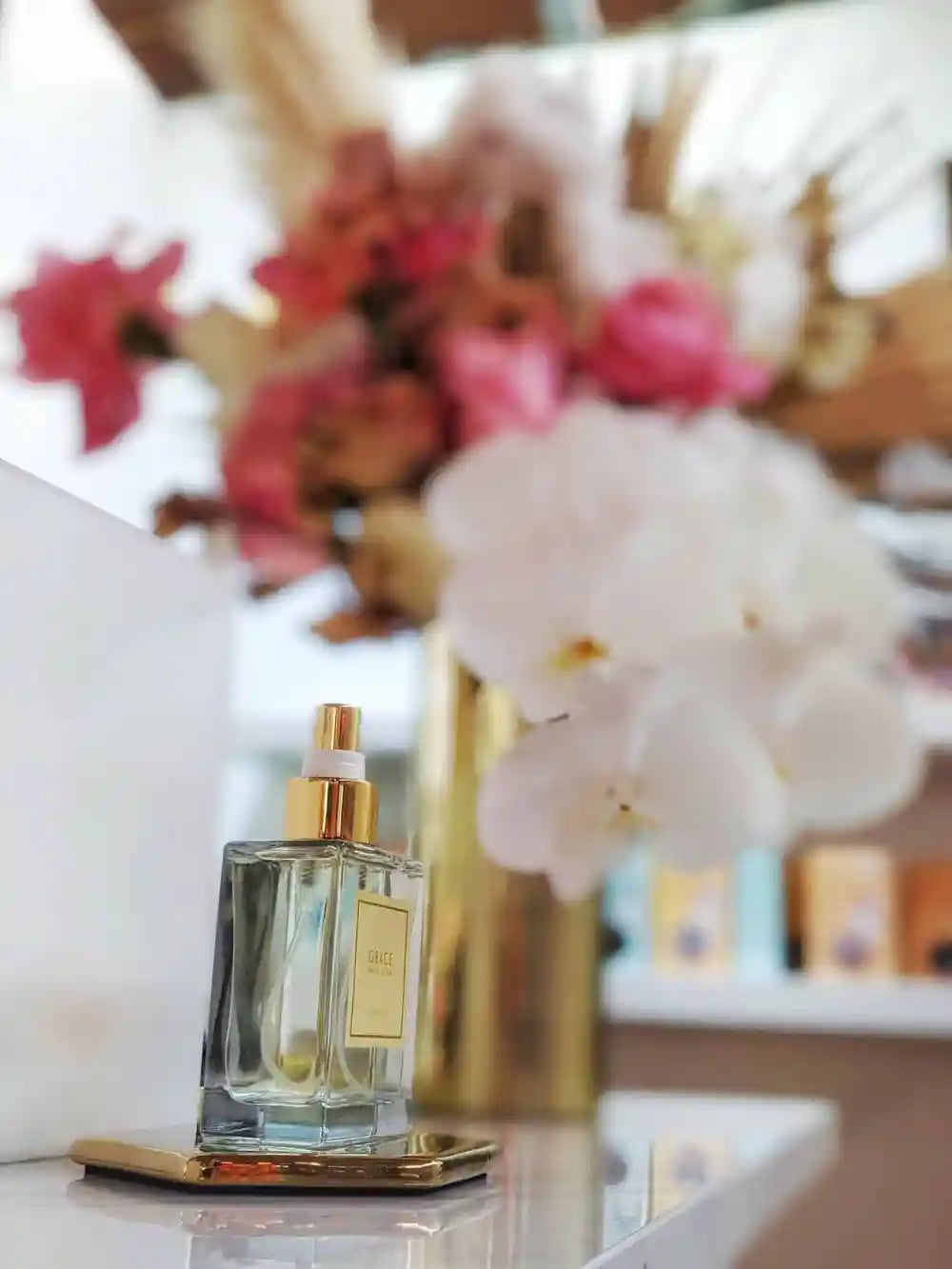
I do not really separate this from the bouquets we send every day, or the flowers we make for events. It is the same eye, pointed at a different problem. Whether it is four hundred stands or one front door, the question does not change: what do you want them to remember. You answer that first, and then you design for it.

A piece designed to make an entrance.
Osaka, arranged in its vase: soft pink and white, built to be seen across a room. From $235. Shop Osaka →
Fashion taught me that attention is designed, never hoped for. I just point that lesson at flowers now, and the front door is my favourite room in the show.
