

July sits in the depths of the Australian winter, which makes a July birthday a fine excuse to bring something tall, bright and alive indoors.
The birth flower for July is the larkspur
July’s birth flower is the larkspur, with the water lily as its traditional alternative. The larkspur is the one you’ll give in a vase — those tall, spired stems of blue, purple, pink and white.
What it means
Larkspur stands for an open heart, positivity and strong bonds — a flower for warmth and lightness rather than ceremony. Its colours shade the message a little, but the through-line is simple, open-hearted affection.
Here’s the botany worth knowing: larkspur belongs to the Delphinium genus, and the name delphinium comes from the Greek delphis, “dolphin” — for the shape of the flower’s bud. If you’d like to go deeper, we’ve written about larkspur’s close cousin, the delphinium.

Why it makes a good gift (with one note)
Those tall spires bring height and life to a winter room like little else. One gentle caution: larkspur is toxic if eaten, so keep it clear of curious pets and children. Paired into a soft, textural bouquet, it’s a real lift on a cold July day.

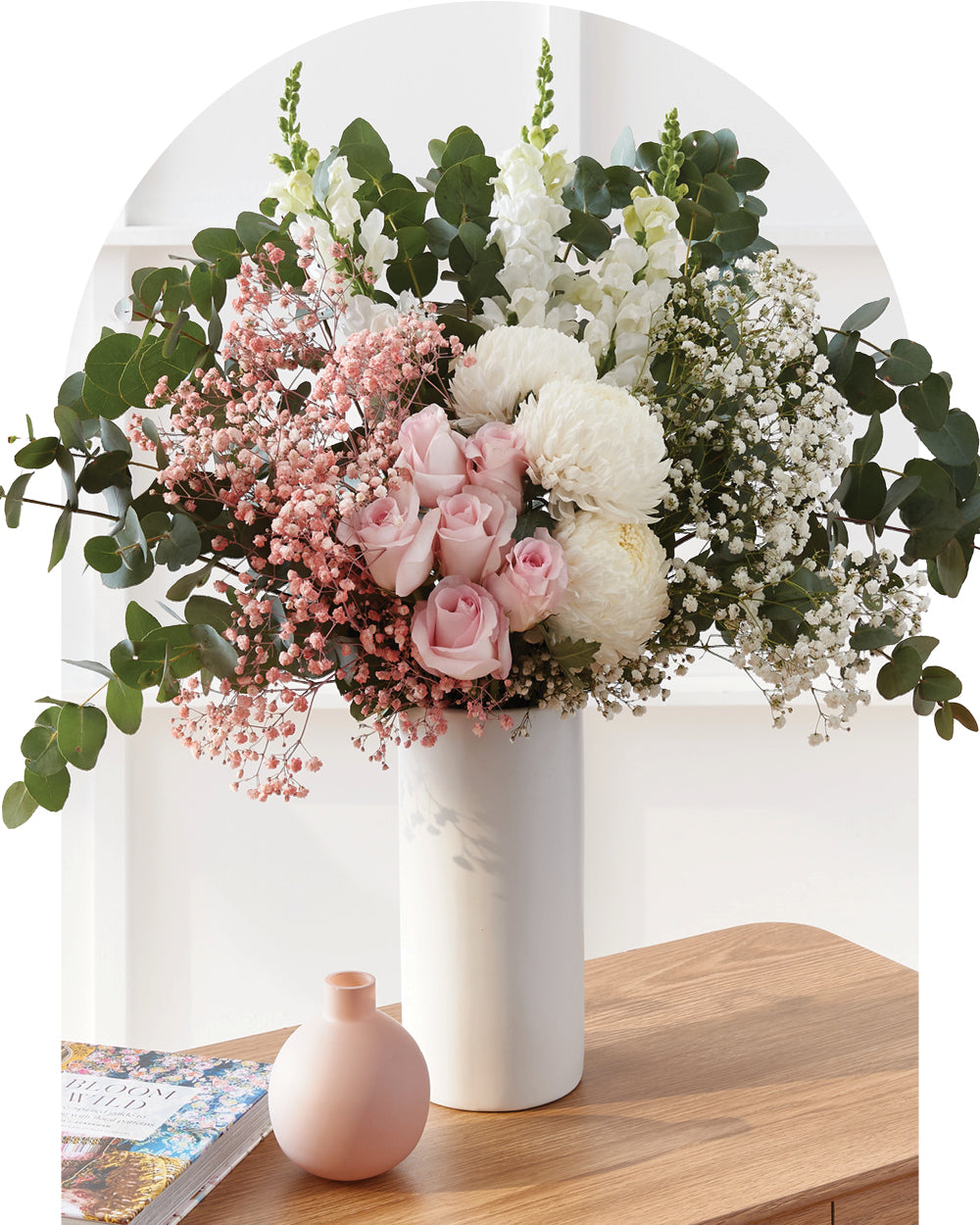
Shop the Pyrenees Bouquet → A soft, textural bouquet to warm up a winter room, from $120.
The part they’ll remember
A bright, open-hearted flower for the middle of winter. Carry on to the August birth flower, back to June, or browse the full birth month flowers guide.
Frequently asked questions
What is the birth flower for July?
The larkspur, with the water lily as a traditional alternative. The larkspur is the one usually given as a cut flower.
What does larkspur symbolise?
An open heart, positivity and strong bonds — a warm, light-hearted sentiment rather than a formal one.
Is larkspur the same as delphinium?
They’re very close — larkspur belongs to the Delphinium genus. The name comes from the Greek for “dolphin,” after the shape of the bud.
Is larkspur safe around pets and children?
No — it’s toxic if eaten, so keep arrangements out of reach of curious pets and small children.