


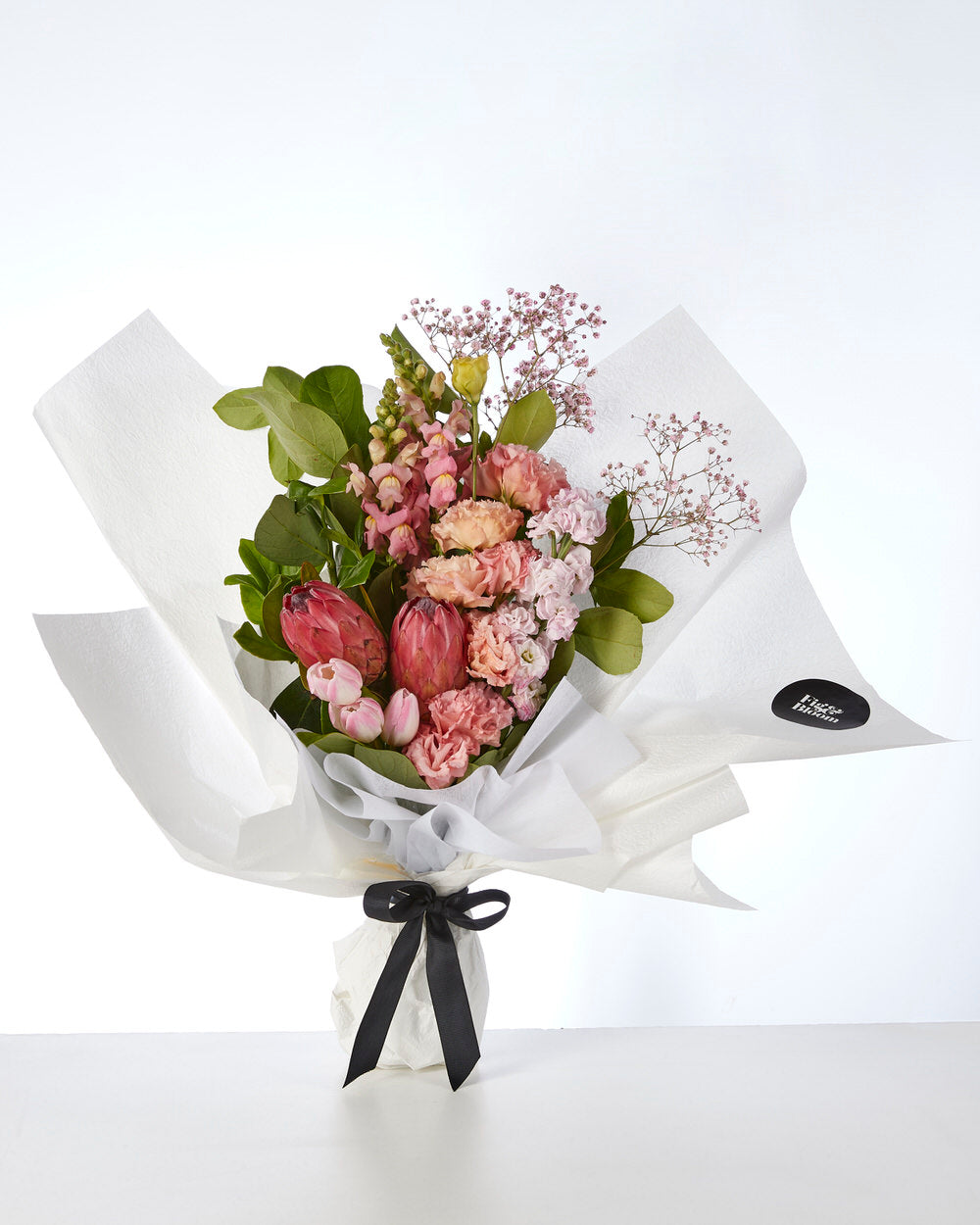


Florence Bouquet
- Regular price
- $166.00
- Regular price
-
- Sale price
- $166.00
- Unit price
- per
Delivery details


FEATURED IN


Description
Description
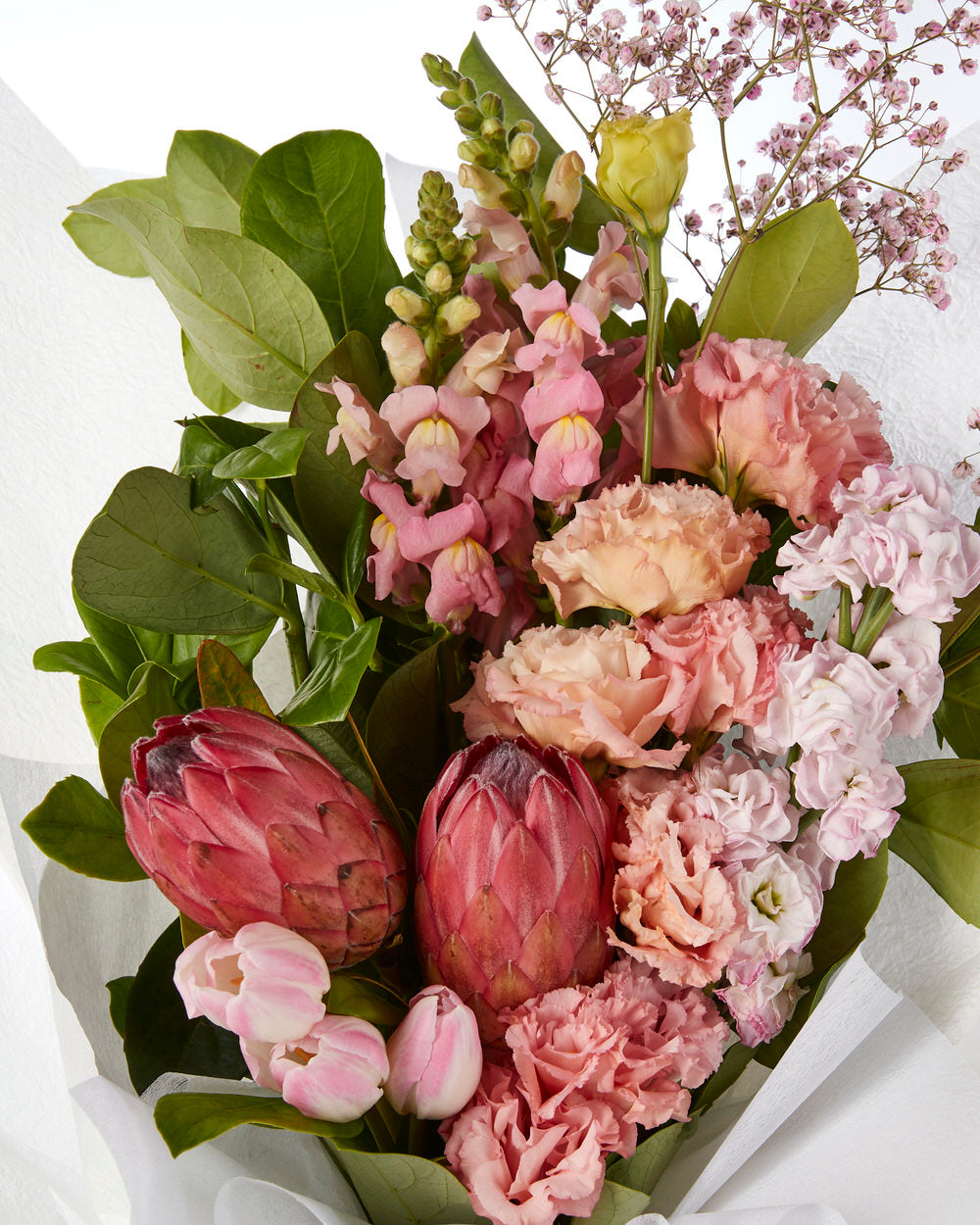
Inspired by the prettiest red and pink terracotta buildings, and Renaissance art in Florence. This collection of blooms are striking and timeless.
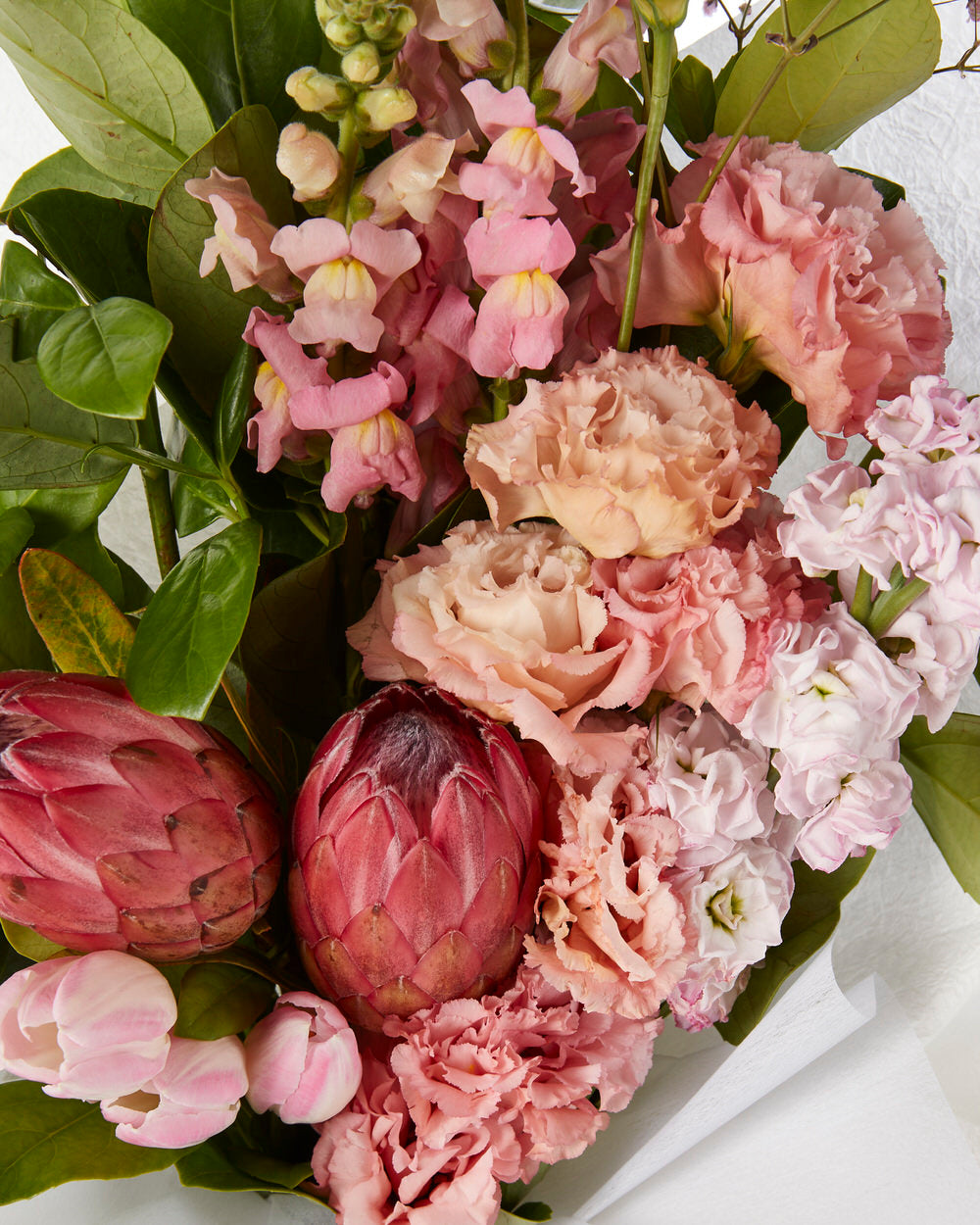
Subject to market availability this arrangement includes Tulips, Protea, Lisianthus and Viburnum foliage.
Care Instructions
Care Instructions
How to Care for Cut Flowers
Trim the Stems
Cutting the stems is a really important step in conditioning our blooms. When first receiving our blooms from Market, they are not guaranteed to have been recently cut. So to give them maximum vase life, trimming the stems is vital – not only when you first receive them, but every 2 days after that.
While in transit, the florals will be left out of water and therefore a scab will form on the end of the stem. Trim this off so that the stem can absorb as much water to rehydrate. After trimming, immediately place back in fresh water, so a new scab doesn’t form, and so the cut stem doesn’t suck up air and dust, clogging the stems from drinking water easily. You can even hold the stem underwater as you cut, then quickly transfer it to the vase.
We recommend trimming off about 2cm from the end of the stem, this clears off any part of the bottom of the stem that has scabbed or browned. Ensure you always trim on an angle so that there is a larger surface area for water absorption. If the stems are sitting on the bottom of the vase and they have been horizontally cut and not on an angle, it’s harder for the water to be absorbed.
The Right Tools
It is really important to use the correct snips or secateurs instead of a kitchen knife or ribbon scissors that will crush the stem, damaging its water-conducting vessels, rather than getting a nice clean slice. Just like cutting your veggies! If using a blunt knife, it really stuffs up your tomatoes! Flowers are no different!
Remove Excess Leaves
Conditioning the flowers by stripping off the foliage is another really important step in guaranteeing the maximum vase life for your florals. Some flowers have a lot of foliage up the stem, some have little, Either way, you’ll generally want to remove around ¾ of the foliage so there’s only a little bit around the head. This allows all of the energy from the water to hydrate the head of the flower rather than focussing on hydrating the leaves. This also ensures that there will be no leaves below the water line.
Leaves below the water line is how bacteria will form, discolouring the water and causing the stems to rot. You’ll also notice a bad smell. So best to avoid this altogether.
Also, you’ll notice some leaves will also wilt or brown around the edges well before the flower itself has started to go bad, so best to remove them to keep the whole design from looking tired.
Fresh Water
While growing in the ground, a plant’s roots would be used as a way to filter out bacteria and anything nasty that could harm the plant or flower.
After it has been cut however, the flower has now lost this filter, meaning it will take in anything and everything that is in the water – particularly ethylene, bacteria, fungi and air.
This is why it is so vital to have a clean vase and fresh water.
It’s very important to start with a clean vase and to clean your vase thoroughly every time you change the water. It’s best to use a sponge, with hot water and a little bleach. Consider turning it upside down and allowing it to air dry rather than using a towel, to avoid leaving fibres behind. A microfibre cloth could also do the trick.
Wondering what temperature the water should be? Room temperature water is best. Cold water moves slowly up the stem and delays hydration of the head, whereas leaving your flowers long term in hot water can cause them to sweat and lose water (the opposite of what you want!). Room temperature water is best to allow the water to travel up the stem whilst protecting the flower.
So, when you’re filling your vase with tap water, don’t put the flowers in right away. Leave it a little while to allow the water to reach room temperature. This also gives a chance for the larger air bubbles from the tap water to escape from so they don’t clog the stem and interfere with its water uptake.
Change the water at least every 2 days or until the water becomes murky: whichever comes first. Be sure to rinse the part of the stems which were underwater also, to remove residual bacteria.
Between water changes, it’s a good idea to pay attention to any foliage that might have fallen into the vase, and fish it out with a clean spoon or fork.
It’s a good idea to cut another 2cm off the stems every 2 days. The clogging of a stem happens near the base, so by trimming the ends you’re reopening the stem so it can take up a lot more water.
Make Your Own Flower Food
Commercial Flower foods contain a specific amount of certain chemicals which are proven to prolong the life of flowers.
Remember – any good flower food provides a perfect balance of Nutrients – namely sugar, an Antibacterial – often bleach or vinegar, and an acidifier – such as from lemon or lime juice.
The antibacterial obviously kills any harmful bacteria present and slows it from forming. The sugar gives the flower an energy boost which helps it to blossom. The acidifier helps the antibacterial do its job, as well as dissolves most air bubbles and most importantly balances the PH levels of your tap water.
I like to stay as natural as possible, so using home remedies are great because it’s made from using things around your home!
It’s just important to pay attention to the balance of your ingredients.
For every 1 litre of fresh vase water:
- 1 teaspoon of household sugar (nutrients)
- 1 teaspoon of clear unscented household bleach (antibacterial)
- 2 teaspoons of lemon/lime juice (acidic PH Balancer)
- Mix this with a quarter cup of warm water and stir the mixture until fully dissolved.
- Then mix with 1L of fresh vase water
Even when using this flower food, it is still important to change the water in the vase every 2 days. No matter how hard you try, bacteria will still form in your water, discolouring it and attacking the stem.

Have a question?
Notified by email when this product becomes available


+20% MORE STEMS
Join our list and every order arrives with 20% more stems — on us. No points to collect, nothing to redeem. Just a fuller bunch, every time.