


A month-by-month guide to the flowers at their best in Australia, and how to let the season, rather than the calendar's defaults, shape what you send.
There is a simple reason a flower can feel exactly right in one month and slightly off in another. A flower in season has been grown in its own time, so it arrives fresher, lasts longer, costs less, and looks the way it is meant to. Australia runs on the southern hemisphere calendar, which puts our best flowers about six months out of step with the northern references most charts still use. What follows is a guide to that rhythm: what is at its peak each month, what is arriving, what is on its way out, and the natives that quietly define an arrangement made here.
One note on the year-round layer first. Roses, lisianthus, lilies, carnations, chrysanthemums and gerberas are grown under glass or imported across most of the year, so they sit underneath every month below. This calendar is about the flowers worth waiting for, the ones that are genuinely seasonal. Treat the windows as indicative; they shift by region and by year, so the flowers our designers work with from the market each morning are always the truest guide.
At a glance: the seasonal year
| Month | In season | Seasonal star | Natives |
|---|---|---|---|
| December | hydrangea, sunflower, dahlia, gardenia, agapanthus | local peony (final weeks) | christmas bush, flannel flower, kangaroo paw |
| January | sunflower, hydrangea, dahlia, zinnia, cosmos | sunflower | flannel flower, kangaroo paw |
| February | dahlia, hydrangea, lisianthus, celosia | dahlia | kangaroo paw, banksia beginning |
| March | dahlia, chrysanthemum, celosia, sedum, autumn roses | dahlia | banksia, protea, leucadendron |
| April | chrysanthemum, dahlia, protea, leucadendron | protea and native textures | banksia, protea, leucadendron, leucospermum |
| May | chrysanthemum, protea, banksia, autumn roses | chrysanthemum | banksia, protea, leucadendron |
| June | hellebore, ranunculus, jonquil, early anemone, tulip arriving | hellebore | banksia, protea, wattle foliage |
| July | ranunculus, anemone, tulip, hellebore, jonquil, paperwhite | ranunculus and anemone | protea, banksia, kangaroo paw |
| August | ranunculus, anemone, tulip, stock, poppy | wattle | wattle, banksia, protea |
| September | tulip, ranunculus, freesia, stock, iceland poppy, blossom | blossom and tulip | wattle, waratah arriving, boronia |
| October | ranunculus, sweet pea, freesia, lilac, snapdragon | peony arriving | waratah, boronia, kangaroo paw |
| November | peony, sweet pea, ranunculus, snapdragon, lisianthus | peony at peak | kangaroo paw, christmas bush beginning |
Summer
Summer is heat, and heat is hard on a soft petal. The flowers that hold through a warm delivery run are the sturdier ones, so summer leans on hydrangea, sunflower and lisianthus, while the natives carry the christmas table.
December, early summer
The festive month, and the last call for local peony after the long spring build. hydrangea, dahlia, gardenia and agapanthus are all at their best, and christmas bush, flannel flower and kangaroo paw bring the flowers that suit a christmas table. If someone in your life loves peony, order early; once december closes, the local season is done until next spring.
January, high summer
The quiet gifting month. sunflower is at its brightest and most abundant, and it is a forgiving traveller in the heat. When the weather is at its peak, sturdier flowers like sunflower and lisianthus arrive looking far better than soft spring stems would.
February, late summer
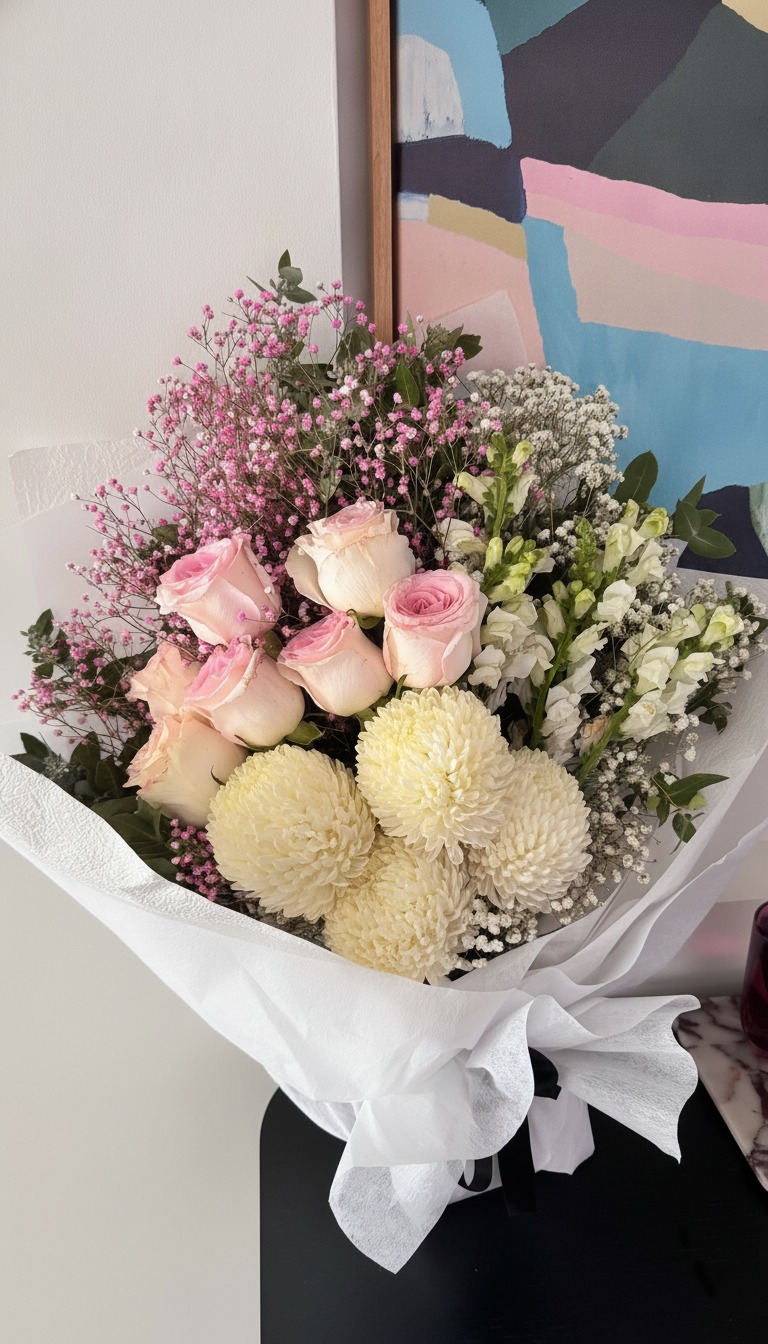
dahlia begins its long autumn run, and valentine's day sits right here. roses are the demand story, but dahlia and hydrangea make a more seasonal and less predictable romantic arrangement for anyone ready to step off the red-rose default. We have made that argument at length, and february is the month it holds most.
Autumn
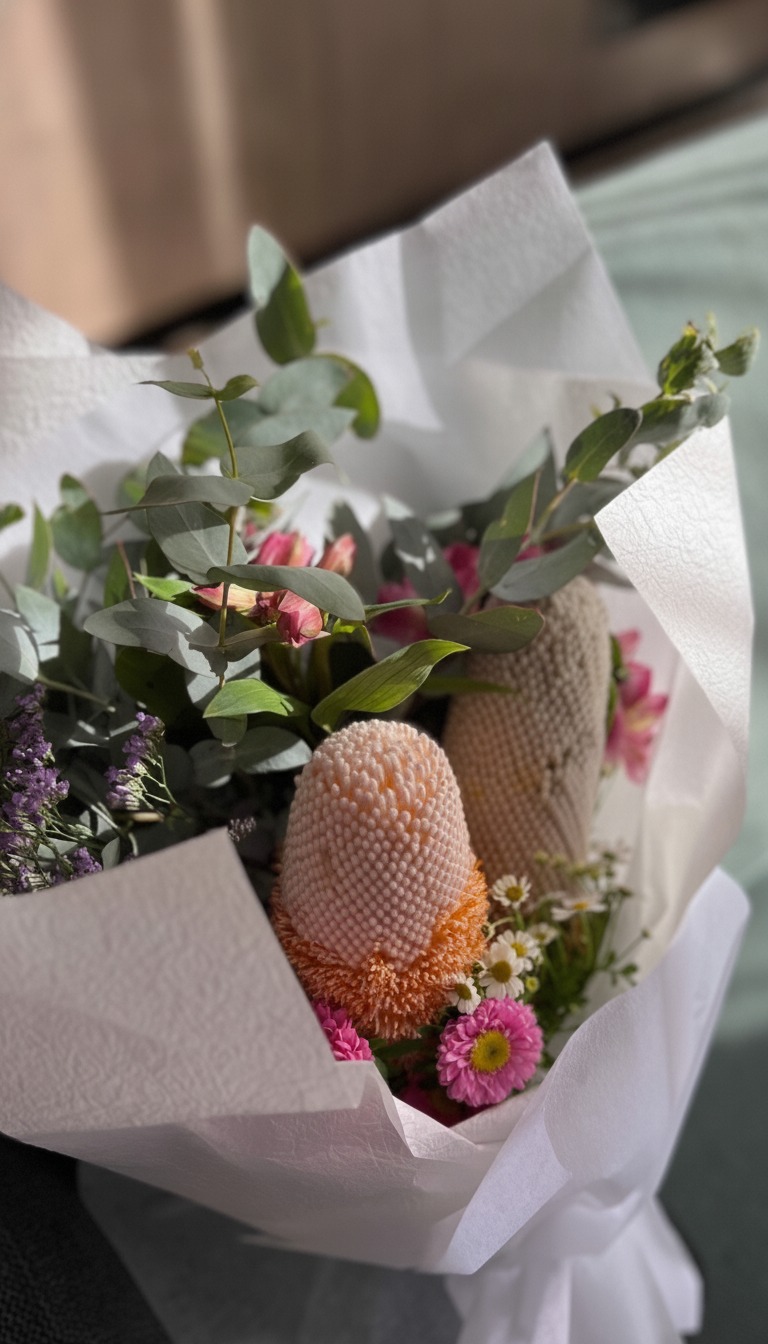
Autumn is the most distinctly Australian stretch of the year. The palette turns rich, tonal and sculptural as protea, banksia and leucadendron arrive, and the autumn rose flush brings garden-style roses back at their best.
March, early autumn
dahlia is the workhorse of the month, joined by chrysanthemum building and the first native textures, protea and banksia, that start the earthy autumn story.
April, autumn
The most distinctly Australian month, when natives carry the arrangement rather than supporting it. protea, banksia, leucadendron and leucospermum make something rich and architectural that looks like nowhere else.
May, late autumn
chrysanthemum comes into its own, abundant and in season, and it happens to be the traditional mother's day flower, the mum for mum. Mother's day, the second sunday of may, is the biggest moment of the season, and the flower that suits it is genuinely at its peak. That rarely lines up so neatly.
Winter
Winter is the cool-season flowers, and the most underrated stretch of the calendar. ranunculus and anemone begin a long, layered run that peaks now and carries into spring, saturated colour in the middle of the cold.

June, early winter
hellebore, the winter rose, leads the month, with ranunculus arriving, the first anemone, and the first tulip of the cool season. banksia, protea and wattle foliage hold the native line.
July, winter
The most underrated month. ranunculus and anemone are at their best and most varied, and they last far longer than they look. A birthday in the middle of winter is a good reason to send them.
August, late winter
The turn toward spring. early blossom signals the shift, with the fuller double and parrot tulips arriving now, but the marker worth leaning into is wattle, golden, fragrant and unmistakably Australian. Wattle day, the first of september, sits right at the edge of this window.
If there is one flower to time a gift around, it is the peony, and november is when.
Spring
Spring is the busiest, brightest seasonal stretch, and it builds to the most anticipated flower of the year.
September, early spring
tulip, ranunculus, freesia, stock and iceland poppy arrive together with the first blossom. waratah, the most dramatic native, has a short window here and into october. The native textures also make spring the season for a father's day arrangement that feels considered rather than obligatory.
October, spring
peony begins, imports first and local stock building toward november. Demand outstrips supply every year, so early october is import-led and pricier, and the window rewards ordering ahead. sweet pea and lilac are short, fragrant and worth catching while they last.
November, late spring
The peony month. Local stock is at its peak, the best value and quality of the entire season, alongside sweet pea, ranunculus and snapdragon. melbourne cup and the spring social season keep demand high, so if you are timing a gift around a single flower, this is the one and this is when.
What is seasonal when you need it
If you are shopping by occasion rather than by month, this is where the calendar lands:
| Occasion | In season |
|---|---|
| Valentine's day, february | dahlia, hydrangea and lisianthus alongside the roses |
| Mother's day, may | chrysanthemum, protea, autumn roses |
| Father's day, september | native textures, banksia, protea, wattle |
| Christmas, december | hydrangea, christmas bush, native foliage, the last peony |
| New baby, year-round | soft seasonal stems, gentle in tone whatever the month |
| Sympathy, year-round | white seasonal flowers, shifting with the calendar |
Sympathy is the clearest example of why season matters more than a fixed recipe. The white flower that carries the gesture changes through the year, hellebore and ranunculus in winter, peony and stock in spring, hydrangea in summer, chrysanthemum in autumn. The same restraint, told in whatever is freshest.
The easiest way to send something that feels right is to follow the season. Our designers build to what the market gives them each morning, which is why a seasonal arrangement tends to look more alive than a fixed formula, and why the dried arrangements we make are the one exception that holds its colour for months. The Australian natives, in particular, are at their best here for much of the year and look like nowhere else.

A native arrangement is the most Australian way to mark a moment.
banksia and textural foliage, built to last and to travel. From $130. Shop the Broome →


