


The Australian Flower Calendar: What's in Season, Month by Month
A month-by-month guide to the flowers at their best in Australia, and how to let the season, rather than the calendar's defaults, shape what you send.
There is a simple reason a flower can feel exactly right in one month and slightly off in another. Following the local growing season can open up a wider choice of flowers, but freshness, vase life and price also depend on weather, demand and how the stems are handled. Australia runs on the southern hemisphere calendar, which puts our best flowers about six months out of step with the northern references most charts still use. What follows is a guide to that rhythm: what is at its peak each month, what is arriving, what is on its way out, and the natives that quietly define an arrangement made here.
Roses, lilies, carnations, chrysanthemums and gerberas are available through much of the year through local production and imports. Lisianthus and tulips can also be available outside their outdoor growing seasons. The flowers our designers work with from the market each morning are the best guide to what we can offer.
This calendar highlights typical seasonal choices in Australian flower markets. Timing varies with growing region, variety and weather. Protected growing and imports can extend availability beyond the local outdoor season. Check with us if a particular flower matters to your order.
We use “natives” in the broad floristry sense, including Australian natives and South African flowers such as protea, leucadendron and leucospermum. Availability within each group varies by species and grower.
At a glance: the seasonal year
| Month | In season | Seasonal star | Natives |
|---|---|---|---|
| January | hydrangea, dahlia, sunflower, lisianthus, celosia; dahlia supply builds by region | sunflower | flannel flower, kangaroo paw (grower-dependent) |
| February | dahlia, hydrangea, celosia, lisianthus; commercially grown tulips may also be available | dahlia | banksia (variety-dependent), leucadendron |
| March | dahlia, hydrangea, celosia, garden roses; hydrangea availability changes as the season progresses | dahlia | banksia, protea, leucadendron |
| April | dahlia, field-grown chrysanthemum, garden roses; dahlias finish with cold weather and frost | chrysanthemum | banksia, protea, leucadendron |
| May | field-grown chrysanthemum, stock, snapdragon; tulips are also a market option | chrysanthemum | banksia, protea, leucadendron |
| June | jonquil, tulip, stock, freesia; early ranunculus and hellebore depend on the grower | jonquil | banksia, protea, leucadendron |
| July | tulip, jonquil, stock, freesia, hellebore; anemone and ranunculus supply varies by region | tulip | protea, banksia, leucadendron |
| August | tulip, anemone, ranunculus, stock, poppy | wattle | wattle, banksia, protea |
| September | tulip, ranunculus, freesia, stock, poppy; local timing varies | tulip and ranunculus | waratah, boronia, kangaroo paw, leucospermum |
| October | ranunculus, sweet pea, freesia, snapdragon; local peonies begin as crops mature | peony arriving | waratah, boronia, kangaroo paw, leucospermum |
| November | peony, snapdragon, lisianthus, hydrangea; late ranunculus and sweet pea may persist in cooler districts | peony | kangaroo paw, leucospermum, Christmas bush beginning |
| December | hydrangea, sunflower, lisianthus, agapanthus; early dahlias and late peonies require availability checks | hydrangea | Christmas bush, flannel flower, kangaroo paw |
Summer
Hydrangea, sunflower and lisianthus are familiar summer choices, while Christmas bush and other natives bring texture to the festive table. Summer flowering does not make a cut stem heatproof. Hydrangeas in particular need reliable hydration and protection from heat.
December, early summer
Hydrangea, sunflower, lisianthus and agapanthus are seasonal choices, while Christmas bush, flannel flower and kangaroo paw bring the flowers that suit a Christmas table. Dahlias begin with some growers now and build into summer. Late local peonies may still be available, but they are not a dependable choice for Christmas; check the actual supply before planning around them.
January, high summer
Sunflower, hydrangea, lisianthus and celosia bring the summer palette, with dahlia supply building as regional crops come into flower. Keep arrangements cool and well supplied with water, especially during hot weather.
February, late summer
Dahlia is in its summer-to-autumn run, and Valentine's Day sits right here. roses are the demand story, but dahlia and hydrangea make a more seasonal and less predictable romantic arrangement for anyone ready to step off the red-rose default. We have made that argument at length, and February is the month it holds most.
Autumn
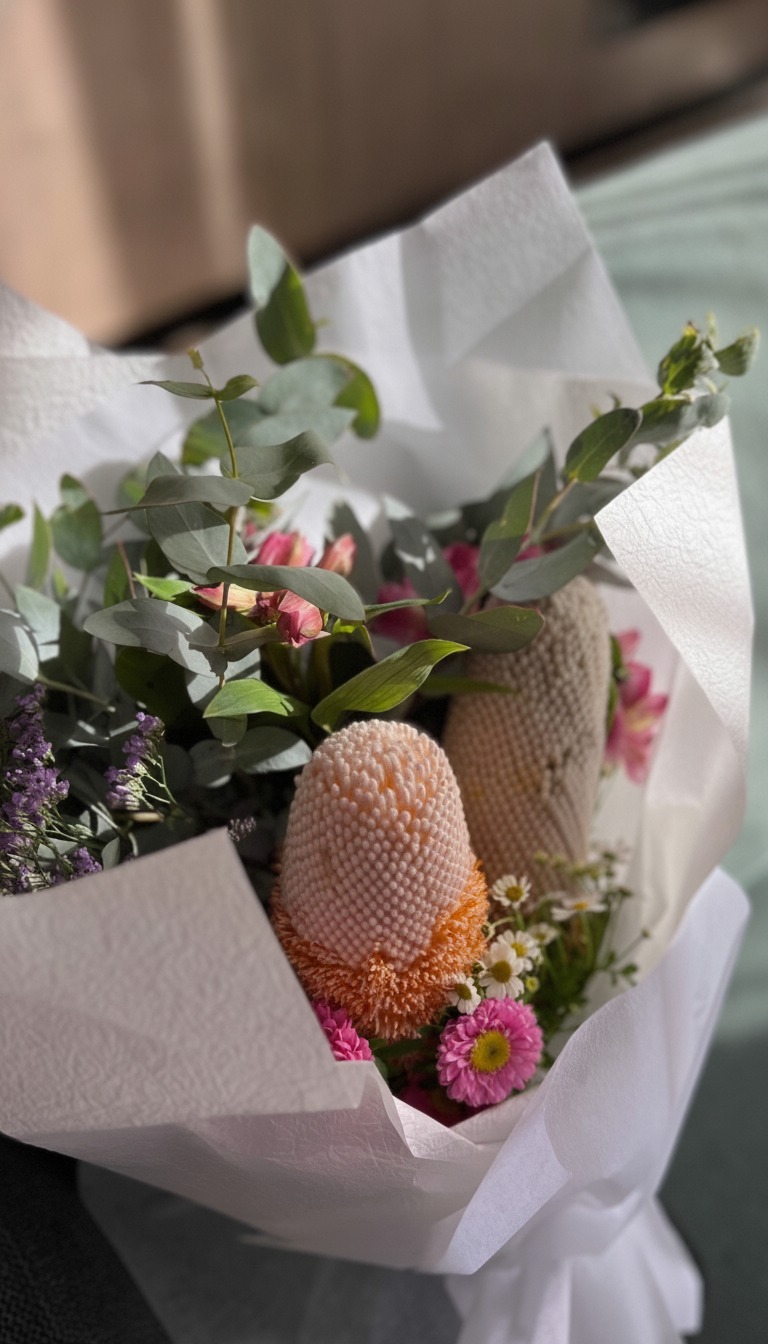
The palette turns rich, tonal and sculptural through autumn, with banksia, protea and leucadendron alongside dahlias and garden roses. These groups do not all arrive at once: their windows depend on variety, growing region and weather.
March, early autumn
Dahlia is a useful seasonal choice, alongside celosia, garden roses and late hydrangea. Banksia, protea and leucadendron add native textures, with different varieties available at different times.
April, autumn
Field-grown chrysanthemums come into season, while dahlias continue where cold weather and frost have not ended the crop. Banksia, protea and leucadendron add architectural shapes. Leucospermum, the pincushion protea, is principally a spring choice.
May, late autumn
Field-grown chrysanthemum comes into its own in autumn, alongside the chrysanthemums supplied through much of the year. It is also the traditional Mother's Day flower, the mum for Mum. Stock, snapdragon and commercially grown tulips give May arrangements other options.
Winter
Winter brings jonquil, tulip, stock and freesia, with hellebores and the developing ranunculus and anemone season adding variety. The timing of early stems and the strongest supply varies by region and grower, with ranunculus and anemones continuing into spring.

June, early winter
Jonquil, tulip, stock and freesia are useful cool-season choices. Early ranunculus and hellebores depend on the grower, while anemone availability needs checking. Tulips can reach Australian markets well before June through commercial production. Banksia, protea and leucadendron provide native textures.
July, winter
Tulip, jonquil, stock, freesia and hellebore offer a winter palette. Ranunculus and anemones may also be available, but July is not a universal peak across Australia. For a birthday in the middle of winter, let the current market selection guide the arrangement.
August, late winter
The turn toward spring brings tulips, ranunculus, anemones, stock and poppies, with early blossom in some districts. Wattle is a familiar late-winter and spring marker, though flowering varies by species and region. Wattle Day, on 1 September, sits at the edge of this window.
If there is one flower to time a gift around, it is the peony, and November is when.
Spring
Spring is the busiest, brightest seasonal stretch, and it builds to the most anticipated flower of the year.
September, early spring
Tulip, ranunculus, freesia, stock and poppy are spring choices, with blossom timing varying by district. Waratah, boronia and kangaroo paw bring native colour, while leucospermum enters its principal spring window.
October, spring
Local peonies begin as individual crops mature, with supply generally building towards November. Ranunculus, sweet pea, freesia and snapdragon offer other spring choices. Waratah, boronia, kangaroo paw and leucospermum bring structure and colour to native arrangements.
November, late spring
November is a strong planning month for local peonies, alongside snapdragon, lisianthus and hydrangea as regional supply builds. Ranunculus and sweet peas may persist in cooler districts, but should be checked rather than assumed. The peony harvest can extend into December with later growers; its exact finish changes with the season.
What is seasonal when you need it
If you are shopping by occasion rather than by month, this is where the calendar lands:
| Occasion | In season |
|---|---|
| Valentine's Day, February | dahlia, hydrangea and lisianthus alongside the roses |
| Mother's Day, may | chrysanthemum, stock, snapdragon, protea |
| Father's Day, September | native textures, banksia, protea, wattle |
| Christmas, December | hydrangea, Christmas bush, native foliage |
| New baby, year-round | soft seasonal stems, gentle in tone whatever the month |
| Sympathy, year-round | white seasonal flowers, shifting with the calendar |
Sympathy is the clearest example of why season matters more than a fixed recipe. The white flower that carries the gesture changes through the year, jonquil and stock in winter, peony and ranunculus in spring, hydrangea in summer, chrysanthemum in autumn. The same restraint, told in whatever is freshest.
The easiest way to send something that feels right is to follow the season. Our designers build to what the market gives them each morning, which is why a seasonal arrangement tends to look more alive than a fixed formula, and why the dried arrangements we make are the one exception that holds its colour for months. Different native flowers and foliages bring their own character through the year.

A native arrangement is the most Australian way to mark a moment.
banksia and textural foliage, built to last and to travel. From $130. Shop the Broome →


