


Lily Flower Guide: Meaning, Types, Safety and Care
What lilies mean, how to choose between fragrant and low-scent varieties, when to send them, and the safety check every cat household needs.
Lilies can make a room feel tender, ceremonial or full of life before the card is read. For someone who loves their scent and scale, one open flower can hold the whole arrangement; for someone sensitive to fragrance, or with a cat at home, the thoughtful choice is a different flower.
Start with the person and the occasion, then consider colour, fragrance, the home and how the buds will open over the following days. Use the card to make the message unmistakably yours.
Important for cat households: Do not send or bring lilies into a home with cats. The RSPCA advises that true lilies and daylilies are extremely toxic to cats, including petals, stems, leaves, pollen and even vase water. If exposure is suspected, seek immediate veterinary attention.
What do lily flowers mean?
Lilies commonly represent purity, renewal, devotion, admiration and remembrance. The meaning changes with colour, occasion and culture, so treat flower symbolism as a starting point rather than a fixed code.
White lilies often carry associations with remembrance and new beginnings. Pink lilies can suggest affection or admiration. Yellow lilies feel warm and companionable, while orange lilies bring confidence and energy. A white lily at a wedding and the same flower sent after a loss can carry very different messages.
| What you want to say | Lily cue | Good fit | Practical check |
|---|---|---|---|
| I am thinking of you | White or soft-toned lilies | Sympathy, remembrance, support | Confirm fragrance preferences and whether there is a cat |
| I admire you | Pink lilies | Birthday, Mother’s Day, thank you | Let the card name what you admire |
| I am proud of you | Orange or yellow lilies | Graduation, promotion, new home | Choose stronger colour for someone who enjoys it |
| I love you | Deep pink or red lilies | Anniversary or romantic gesture | Make the relationship clear in the card |
| This is a fresh start | White or green-accented lilies | Wedding, new role, new chapter | Follow the recipient’s cultural traditions |
The flower sets the tone. The sentence on the card gives it meaning.
Which lilies work best in a bouquet?
Asiatic lilies suit a lower-scent arrangement, while Oriental lilies suit someone who enjoys large flowers and strong perfume. Trumpet and tiger lilies bring more distinctive shapes, but colour, freshness and the recipient’s taste matter more than learning every botanical category.
Are Asiatic lilies fragrant?
Asiatic lilies are usually unscented or only lightly scented. Their upright form and clear colours make them useful when the recipient likes lilies but does not want perfume to fill the room. They can work well for birthdays, congratulations and modern arrangements where shape and colour should lead.
Why do Oriental lilies smell stronger?
Oriental lilies are known for large flowers and pronounced fragrance. A small number of stems can change both the look and scent of a room, so they are best sent to someone who already enjoys perfumed flowers. Closed buds let the arrangement change over several days instead of arriving fully open at once.
What about tiger and trumpet lilies?
Tiger lilies bring spotted orange petals and a strong graphic shape, while trumpet lilies have long flowers that open outwards. Both need space around them to be seen properly. Ask three questions before choosing: does the person like scent, will the colour suit their home, and is the flower safe for everyone who lives there?
Lilies may be available across much of the year, while exact varieties and colours still change with growers and the market. The Australian flower calendar helps set a seasonal brief without treating any one stem as guaranteed.

When should you send lilies?
Send lilies when the moment calls for presence, fragrance or a sense of ceremony. They can suit celebration, gratitude, romance and remembrance, provided the recipient enjoys the flower and there are no cats in the home.
For a birthday, pink, yellow or orange lilies can feel generous and expressive. If the person prefers less scent, choose Asiatic lilies or a different seasonal focal flower from the birthday flowers collection.
For congratulations, orange and yellow suit a promotion, graduation or new home. The congratulations flowers collection offers current designs when a specific lily is unavailable.
For sympathy or remembrance, white lilies are traditional, but a favourite colour or familiar flower may feel more personal. A vase design from the sympathy flowers collection can also be practical because it arrives ready to place.
For romance, deep pink or red lilies can feel less expected than a familiar single-flower gesture. Check the recipient’s fragrance preference first, then let the message say what the flowers cannot.
Are lilies safe for cats?
No. True lilies and daylilies should not be kept in any home with a cat. The RSPCA warns that petals, stems, leaves and pollen are toxic, and even the water in a vase of cut lilies is thought to be dangerous. A small exposure can cause rapidly fatal kidney failure.
Do not rely on a high shelf or a closed room. Pollen can fall onto furniture or a cat’s coat, then be swallowed during grooming. If a cat may have touched, licked or swallowed any part of a lily, or drunk the vase water, seek immediate veterinary attention. Do not wait for symptoms.
If you are sending flowers, ask whether the household has cats. Request a lily-free design and state the safety requirement clearly when arranging the gift. Our guide to plants that can be toxic to pets can help with the wider home check.
How do you care for cut lilies?
Start with a clean vase, fresh water and a new angled cut, then keep the arrangement cool. Lilies open best when the stems can drink freely and the water stays clear.
- Wash the vase. Use hot soapy water, rinse it well and remove residue from the previous arrangement.
- Trim the stems. Cut two to three centimetres from the base with clean, sharp secateurs or a knife.
- Remove low leaves. Strip foliage that would sit below the waterline, where it can break down and feed bacteria.
- Add fresh water and flower food. Follow the sachet directions rather than making the mix stronger.
- Choose a cool position. Keep the vase away from direct sun, heaters, warm appliances and ripening fruit.
- Refresh every two to three days. Change the water, rinse the vase and trim a small amount from each stem.
- Remove fading flowers. This leaves room for later buds to open.
These are the same fundamentals covered in our guide to keeping flowers alive longer.
How do you remove lily pollen?
Lift loose lily pollen with sticky tape instead of rubbing it or adding water. Friction pushes the pigment into fabric, while water can spread the stain. If you remove the anthers, wait until the flower opens and lift them away before the pollen becomes loose.

What should you choose if lilies are not right?
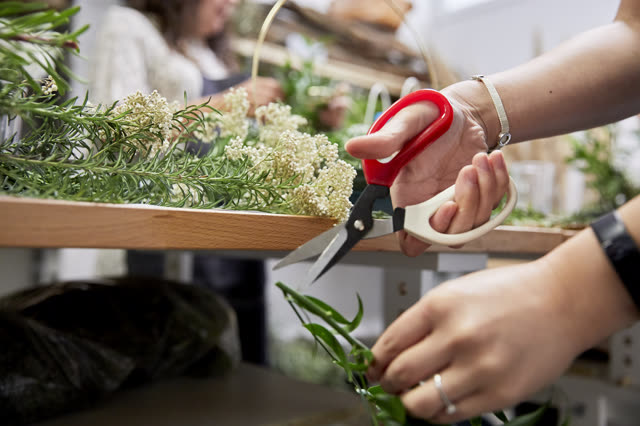
Choose the effect rather than forcing the flower. If there is a cat, a fragrance sensitivity or no strong lilies at market, another seasonal focal flower can still carry warmth, ceremony or remembrance.
In the Fig & Bloom studio, we design for line, colour and proportion rather than treating an exact stem list as a recipe. When lilies are unsuitable or unavailable, the better decision is to keep the emotional job and choose the strongest seasonal focal flower instead.

Prefer a restrained white palette without insisting on one stem?
Pyrenees is a current Fig & Bloom design, from $119. For a cat household, confirm a lily-free design with the studio before ordering. Shop the Pyrenees →
What should you write on a lily card?
Write one specific sentence that names the person, moment or feeling. A direct message is more useful than explaining the flower’s traditional meaning.
For congratulations: You worked hard for this. I am so proud of you and cannot wait to see what comes next.
For gratitude: Thank you for showing up when I needed it. Your care made a real difference.
For romance: I love the life we are building, especially the ordinary days we share.
For sympathy: Thinking of you and remembering Sam with great affection. There is no need to reply.
Our guide to what Australians write on a flower card offers more simple, personal starting points.
What do people ask about lilies?
What does a lily flower symbolise?
Lilies commonly symbolise purity, renewal, devotion, admiration and remembrance. Their meaning changes with colour, occasion and culture, so the card should make the sender’s intention clear.
What is the difference between Asiatic and Oriental lilies?
Asiatic lilies are usually unscented or lightly scented, with upright flowers in clear colours. Oriental lilies tend to have larger flowers and a much stronger fragrance.
Are lilies poisonous to cats?
Yes. True lilies and daylilies are extremely toxic to cats, including petals, stems, leaves, pollen and even vase water. Keep lilies out of cat households and seek immediate veterinary attention after any suspected exposure.
How long do cut lilies last?
There is no honest universal vase-life number because freshness, variety, transport and room conditions all matter. Clean water, regular stem trims, flower food and a cool position give the buds the best chance to open well.
How do you stop lily pollen staining fabric?
Lift loose pollen with sticky tape and do not rub it or add water. If you remove the anthers as each flower opens, handle them carefully over a wipeable surface.
When should you send lilies?
Lilies can suit birthdays, congratulations, romance, sympathy and remembrance. Choose the colour and fragrance for the recipient, and never send lilies to a home with cats.
A thoughtful choice notices the person as well as the symbol. Start with safety, choose the colour and scent they will enjoy, and write the sentence only you could write.
The moment after the door opens is what matters: a room changed by the flowers, and a message that could only have come from you. If lilies are not the answer, the current bouquet collection is the place to choose what is strongest that week.

