


The details a florist agonises over are almost never the details anyone sees.
Watch someone finish a bouquet and the last five minutes usually go on a single stem. A rose gets turned, then turned back. Eased a centimetre to the left. Considered again from the other side. It is careful work and it is real skill, and I have come to think most of it is spent in the wrong place.
Because here is what happens next. The bouquet gets wrapped. It goes into a van at Fairfield, or Camperdown, or Bowen Hills. Someone opens their door that evening and looks at it for about four seconds before they look at the card. In those four seconds they are not auditing rose placement. Ask them an hour later where the roses sat and they could not tell you.
What they can tell you, every time, is whether the ribbon looked right.
The ribbon is the tell
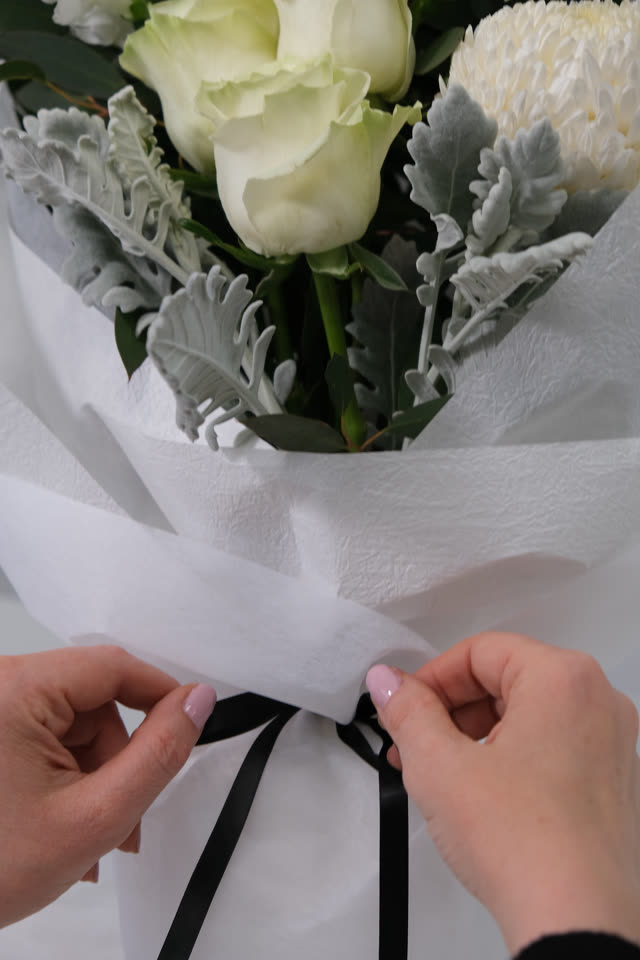
A customer cannot identify whether a rose should have sat here or there. They can absolutely identify a ribbon that is too thin, or too short, or far too long. They notice whether it was cut cleanly or hacked at. Whether it was tied with intent or looped twice and hoped for. Whether it has already begun coming undone by the time the bouquet reaches the kitchen bench.
None of that is floristry, exactly. It is the part people are tempted to call finishing, as though it were something applied after the real work was done. It is not. It is the first thing the eye lands on and the last thing the hand touches, and it carries more of the impression than any single stem in the arrangement does.
I think the reason florists neglect it is that ribbon is not interesting to a florist. Nobody trained for years so they could get good at ribbon. The stem placement is where the craft feels like craft. But we are not making the thing for us.
No one can tell you where the rose should have sat. Everyone can tell you when the ribbon is wrong.
The small things that do matter
None of this is an argument for caring less about detail. It is an argument about which detail.
Here is one I will not skip. I pay close attention to how the petals look, particularly at the centre. If the inner petals are bruised, you can miss it entirely on the day, because the flower is still closed enough to hide them. Then it opens on Wednesday in someone's kitchen and every one of those bruises is on display, at exactly the moment the arrangement should be at its best.
So I take the bruised internal petals off before it leaves the studio.
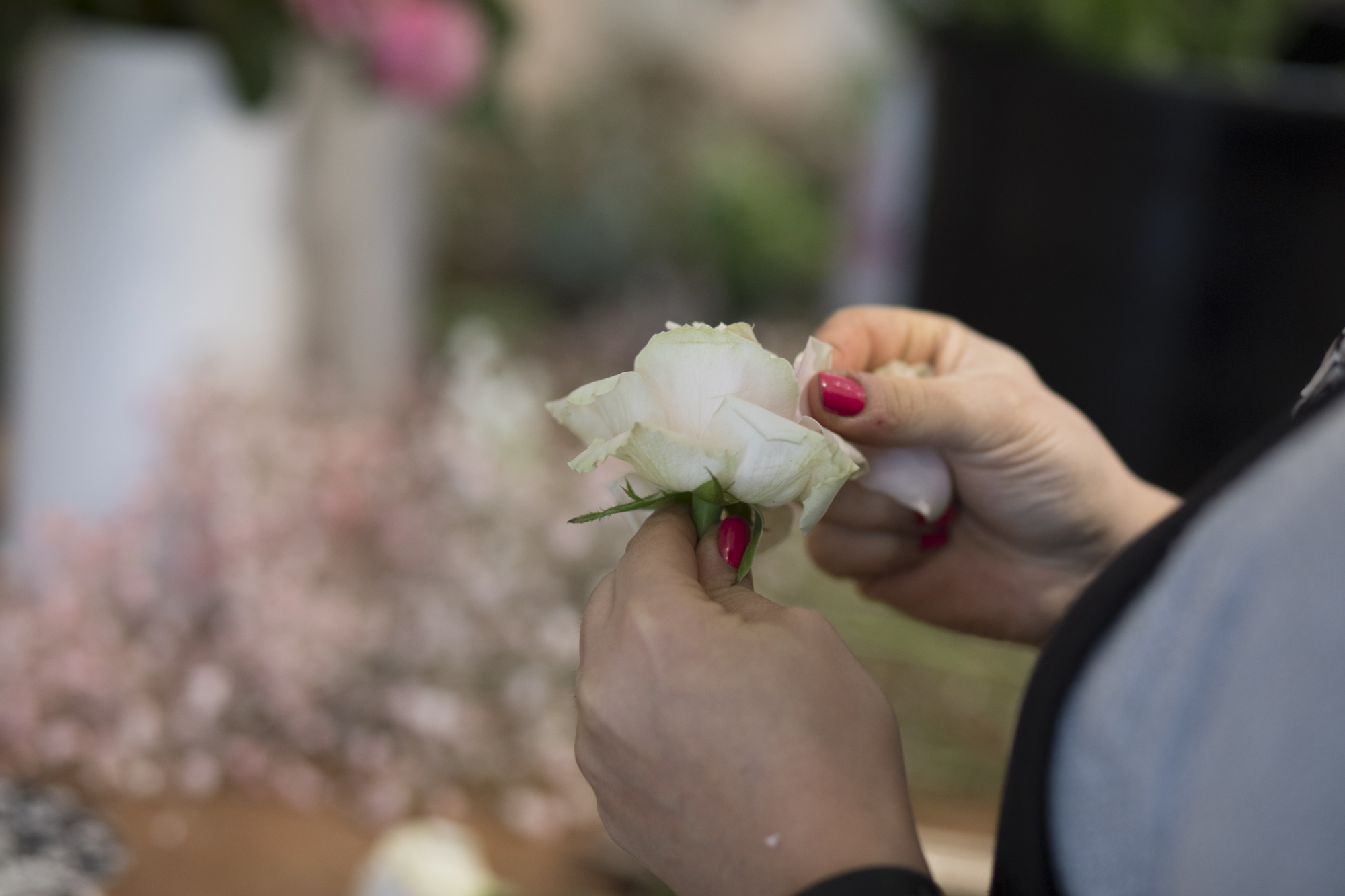
That decision costs a minute and it is completely invisible when it is made. Nobody has ever thanked me for it, because there is nothing to see. It is a decision about a day I will not be there for, which is the only kind of decision that separates an arrangement that photographs well from one that is still good on Thursday.
The ribbon and the petals have the same logic behind them. Both are about the person receiving it rather than the person making it. One is what they see immediately. The other is what they see after we have stopped thinking about them.

The ribbon gets the same minute the stems do.
The Osaka, wrapped and tied the way it leaves the studio. From $140. Shop the Osaka →
What separates the best designer on the bench
I have watched a lot of people learn this work, and the difference between the strongest designer in a studio and the weakest is not dexterity. It is almost never dexterity.
The weakest designer spends a great deal of time on things that do not matter to the customer. They will perfect what is directly in front of them because it is satisfying to perfect, and it feels like diligence, and from a certain angle it is. The strongest designer takes care and pride in the whole experience and keeps a bird's-eye view of it, rather than fixing all the finer details.
That is a harder discipline than it sounds. Stepping back is less comfortable than tidying. It means holding the entire thing in your head at once: how it will be wrapped, how it will travel, what it will look like when the box opens, what it will look like on day four. It means accepting that some imperfection you can see will never be seen by anyone else, and leaving it alone.
Diligence pointed at the wrong target is not a virtue. It just looks like one.
What the four seconds are actually made of
Nobody unwraps a bouquet and thinks about the ribbon. That is precisely the point. They think it looks beautiful, and they could not quite tell you why, and the why is a hundred small decisions made about what that moment would feel like rather than what the bench looked like.
The person who sent it does not see any of it. They are somewhere else, hoping it landed the way they meant it. Most of what we do is really for them.
